Repiping · New York City
NYC Repipe & Repair: copper repiping and leak repair, in all five boroughs.
Find the leak, fix the pipe, and replace the system only when it has failed. In copper, the only material the NYC code allows, priced in writing first.
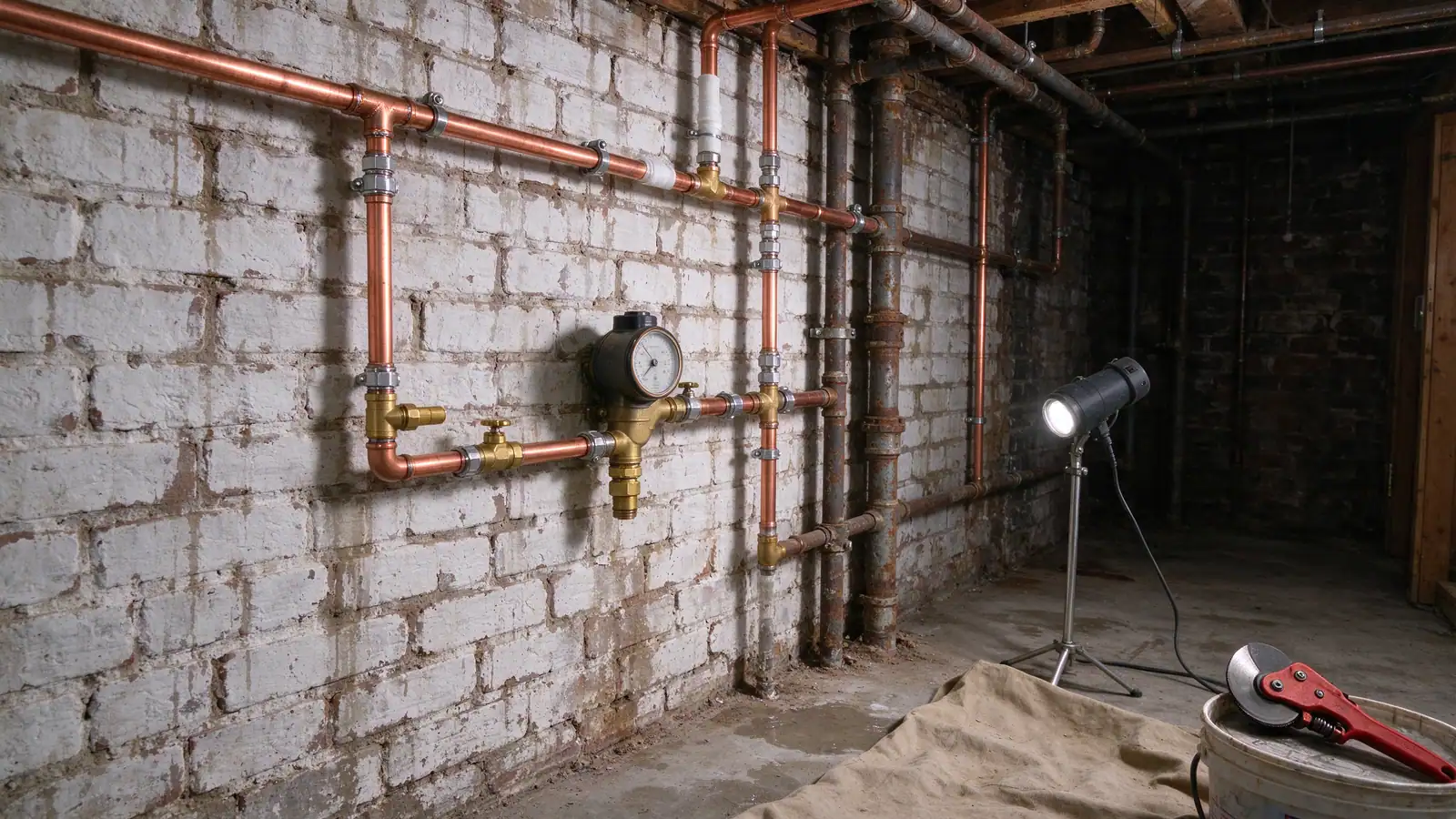
NYC Repipe & Repair is a New York City plumbing company that finds and fixes water leaks, repairs damaged supply pipe and, when the pipe itself has failed, replaces it with code-compliant copper. That covers 1890s brownstones, interwar Queens two-families, prewar co-op apartments and building risers. Every repipe is filed in DOB NOW and pressure-tested before the walls close.
Leaks & Repair
When water is where it shouldn't be
- Plumber for Water LeaksWater through a ceiling, under a sink or behind a wall. Found, stopped and repaired in copper, with the cause explained. Read →
- Water Leak DetectionA stain, a sound in the wall or a water bill that jumped. The source is isolated and pressure-tested before any wall is opened. $0k–$1k
- Pipe RepairLeaking joints, corroded galvanized nipples and cracked fittings, repaired with code-listed copper and brass. Read →
- Burst Pipe RepairShut the main, then call. Emergency repair of burst and frozen supply pipe, filed afterwards under DOB's emergency rules. $1k–$2k
Repipe & Replace
When the pipe itself is done
- Whole House RepipingEvery supply line from the meter to each fixture, replaced in Type L copper for 1–3 family houses, brownstones and rowhouses. $12k–$35k
- Galvanized Pipe ReplacementRust-clogged galvanized steel replaced with copper, the fix for brown water and weak pressure in prewar houses. $12k–$35k
- Apartment RepipingCo-op and condo branch lines replaced back to the riser, to the board's alteration agreement and shutoff rules. $3k–$8k
- Lead Service Line ReplacementLead pipe from the street main to the meter, replaced in Type K copper. Includes how the free DEP program fits in. $5k–$10k
Why now
Why so many NYC pipes are failing at the same time
Seventy-four percent of Brooklyn's one- to four-family houses were built before 1940, according to the city's MapPLUTO property records. Queens' median house dates to 1935. Most were plumbed in galvanized steel, a pipe with a published working life of roughly 40 to 60 years.
“Every 2.31 feet of rise costs one psi. A brownstone's top-floor shower starts 17 psi down before rust narrows the pipe.”
NYC water is soft and chemically aggressive: DEP's annual water quality report puts its average Langelier index at −2.21, which means it dissolves metal rather than coating it. Old galvanized pipe rusts shut from the inside, and the house shows it as brown water, a weak top-floor shower and leaks that arrive one after another.
Should you replace galvanized pipe? →The permit trail
What a legal NYC repipe leaves on the record
Every permitted repipe produces the same paper trail at the Department of Buildings. It's what a buyer's attorney, a co-op board or a lender will look for later.
-
DOB NOW: Build Filed
Limited Alteration Application
Filed by the Licensed Master Plumber, with the scope and the job cost.
-
DOB Issued
Work permit
Issued in real time for most repipes, and posted at the job.
-
On site Installed
Type L copper in
Run alongside the old pipe and switched over section by section.
-
Plumbing Code §108 Tested
Pressure test
The whole new system holds under test before walls close.
-
DOB Signed off
Inspection and sign-off
The job closes cleanly on the building's DOB record.
Three ways it gets done
DIY vs a cheap operator vs a permitted copper job
Three ways NYC pipe work gets done. Only one survives a co-op board, a refinance and the next winter.
| What matters | DIY patch | Cheap operator | Permitted copper job |
|---|---|---|---|
| Pipe material | Whatever the hardware store sells, often PEX | PEX or thin Type M copper to save money | Type L copper, listed in NYC Plumbing Code Table 605.4 |
| Fittings | Push-fit connectors (prohibited, PC 605.9) | Mixed: some push-fit, some solder | Soldered or permanent press joints; dielectric unions at steel |
| Who may legally do it | Not the owner: NYC requires a Licensed Master Plumber | Often unlicensed, or a licence borrowed for the filing | A NYC Licensed Master Plumber, or a crew under one |
| Permit | None | Often skipped (penalties start at $520, or $6,000 in 3+ family buildings) | Filed in DOB NOW and signed off |
| Pressure test | None | Rarely | Whole system tested before walls close |
| Co-op or condo board | Will not approve | Usually rejected at the insurance-certificate stage | Meets typical alteration-agreement requirements |
| At sale or refinance | Unpermitted work can surface in inspection | Open DOB issues can delay closing | A clean DOB record for the job |
Sources: 2022 NYC Plumbing Code, Chapter 6; NYC DOB LAA fee and penalty charts (1–3 family, other buildings).
The boroughs
Repiping in every borough, and why each one is different
Not ready to call?
Send the details. Get a written price back.
Two short steps: what's happening, and where. We'll call to book a visit. Prefer to talk? (929) 659-6658 is answered 24/7.
Free estimate
Answered
Repiping and leak repair, answered
How much does repiping cost in NYC?
A copper repipe of a New York City house typically costs $12,000 to $35,000, depending on bathrooms, stories and wall type. A co-op or condo apartment typically costs $3,000 to $8,000. The DOB permit fee for a 1–3 family house starts at $130. See the full NYC repiping cost answer for sources.
Is PEX allowed for repiping in NYC?
No. Table 605.4 of the 2022 NYC Plumbing Code lists brass, copper and copper-alloy tubing (Types K and L), ductile iron and stainless steel for water distribution. PEX and CPVC aren't on it, so NYC repipes are done in copper. Removable push-fit fittings are also prohibited. More on copper vs PEX.
Do I need a permit to repipe in NYC?
Yes. Replacing a building's water supply piping is filed in DOB NOW by a NYC Licensed Master Plumber, usually as a Limited Alteration Application. Very short repairs can fall under DOB's ordinary plumbing work rules, but a repipe can't. Unpermitted work carries penalties starting at $520. How the permit works.
How do you find a hidden leak without tearing up walls?
By narrowing it down first. Each branch is shut off and the system pressure-tested to show which line is losing pressure. Then moisture readings and the building's pipe layout point to where that line runs. Openings go in last, sized and placed for the repair, so a hidden leak usually needs one small opening, not a demolition.
Does homeowners insurance pay for repiping?
Usually not for the pipe itself. Homeowners policies generally cover sudden, accidental water damage from a burst or leak, not replacing pipe that wore out over time. The resulting ceiling, floor and wall damage is often covered; the repipe is treated as maintenance. Insurance and repiping.
How long does a repipe take, and will I have water?
An apartment repipe typically takes a few days, and a 1–3 family house about five to ten working days, with plaster restoration and the DOB sign-off after. New copper is run alongside the old pipe and switched over section by section, so the house is normally back on water at the end of each working day.
Get a written price on your leak or repipe.