NYC Repipe & Repair handles water leak repair in New York City homes and apartments: water coming through a ceiling, pooling under a sink or staining a wall. Calls are answered 24/7, with a same-day callback. A plumber for water leak calls has two jobs: stop the water, then find out why the pipe failed. In prewar NYC buildings the answer is often corroded galvanized steel or thin-wall copper, so each plumbing leak repair is made in code-listed copper or brass, with a written price before work is booked.
What happens on the first visit
- The leaking line isolated at the nearest valve, so the rest of the home stays on water while the source is traced.
- The source traced from the stain back to the pipe, fitting or fixture, with the pipe material identified at the leak.
- The joints and pipe on either side of the leak checked, to show whether it is a single failure or part of a pattern.
- A written, itemized price for the repair and any wall or ceiling opening, before work is booked.
Where water leaks in NYC homes come from
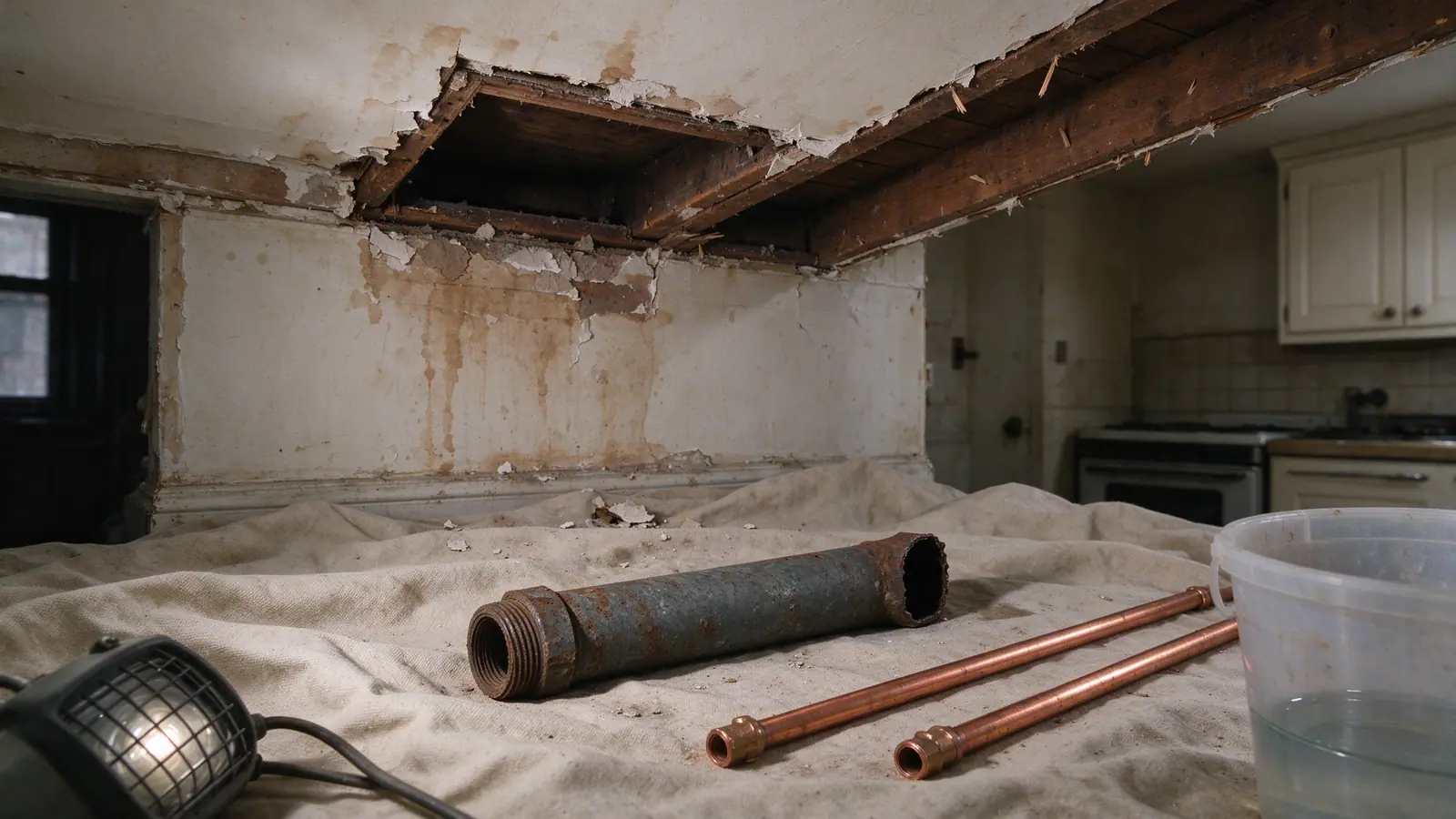
Most leaks in New York City housing start in pipe that is simply old. City property records (MapPLUTO) show 74% of Brooklyn’s one- to four-family lots were built before 1940, and Queens has a median build year of 1935. That stock was plumbed in galvanized steel, which rusts from the inside, and was later patched with thin-wall Type M copper. NYC water makes both worse. DEP’s annual water quality report puts the average Langelier index at −2.21, which means the water tends to dissolve metal rather than coat it.
The usual sources:
- Threaded galvanized joints, where the pipe wall is thinnest after threading.
- Pinholes in older copper, often on hot-water lines. Pinhole leaks in copper pipes covers why.
- Fixture connections and shutoff valves under sinks and behind toilets.
- Risers and branch lines in co-ops, where a leak in one unit shows up in the ceiling below.
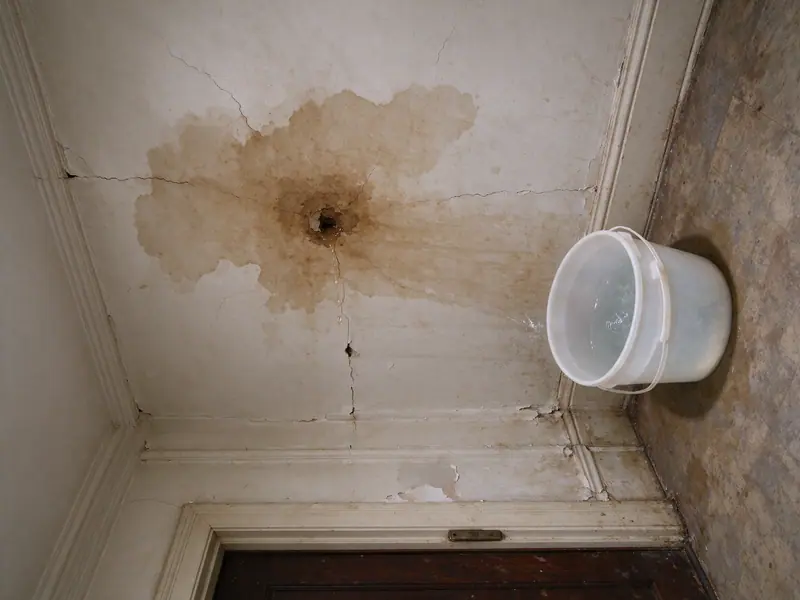
A ceiling stain rarely sits directly under the failure. Water runs along joists and pipe before it drips, so the source has to be traced, not guessed. When it can’t be seen, water leak detection isolates and tests each line before any wall is opened.
How the leak is stopped and repaired
The first job is stopping the water at the nearest valve rather than the main, so the rest of the home stays in service. In an apartment that can mean a riser valve the building controls, which is why the super or managing agent gets called early.
The repair itself follows the 2022 NYC Plumbing Code:
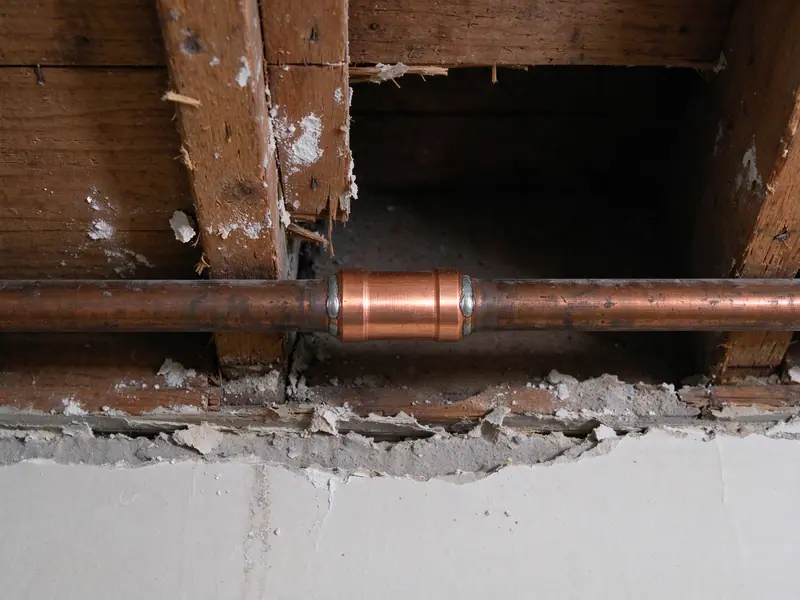
- The failed section is cut out and replaced in Type L copper (ASTM B88) or lead-free brass. Table 605.4 does not list PEX, CPVC or Type M copper for water distribution.
- Joints are soldered or made with permanent press fittings. Removable push-fit couplings are prohibited (PC 605.9), so a hardware-store coupling is a stopgap, not a repair.
- Where new copper meets old galvanized, the joint uses a brass fitting or an ASSE 1079 dielectric union (PC 605.24.1).
- Every fitting on drinking water is lead-free to NSF 372 (PC 605.2).
Openings are kept to the size the repair needs and listed on the written estimate. For a known, visible failure, pipe repair covers the work in more detail. If water is pouring out, go straight to burst pipe repair.
Permits, insurance and who pays
Most leak repairs are short. Under DOB rules, repair or replacement of up to 10 feet of non-gas water piping is ordinary plumbing work. No permit is filed, and the Licensed Master Plumber reports the job to DOB on form OP128. Longer runs move into a Limited Alteration Application in DOB NOW: Build, and the repiping permit guide explains where that threshold sits.
Who pays depends on who owns the pipe. A house owner owns everything from the service line in the street to the fixtures. In a co-op, the usual split is that the building owns the risers and the shareholder owns the branch lines, though the alteration agreement decides it (Habitat). Homeowners insurance generally pays for sudden, accidental water damage, not for replacing pipe that wore out. Is repiping covered by insurance? explains how adjusters draw that line.
When a leak repair is no longer enough
One leak in a sound system is a repair. A second or third leak in the same material is a pattern. Each patch sits next to old pipe that is just as thin. These signs mean the system itself has failed:
- Leaks at more than one joint or floor within a year.
- Brown water after the taps sit overnight (see brown tap water).
- Falling pressure on the upper floors.
- Galvanized pipe that flakes or crumbles when the repair is cut in.
At that point, compare repeat repairs against replacing the run. Pipe replacement covers one bathroom, floor or riser. Galvanized pipe replacement swaps out the old steel. Whole house repiping replaces every supply line from the meter to the fixtures. The repipe assessment gives you a first read on which one fits.
What's included
- Leak isolated at the nearest shutoff or riser valve
- Repair in Type L copper (ASTM B88) or lead-free brass
- Soldered or permanent press joints, never push-fit
- Brass or dielectric transition where copper meets steel
- Fittings and valves certified lead-free to NSF 372
- Pressure check of the repaired section before close-up
- Photos of the failed pipe for your insurer or board
- A plain-language note on whether more leaks are likely
Water through the ceiling or a stain that keeps growing? A same-day callback gets the line isolated and the source named. (929) 659-6658