NYC Repipe & Repair plans and installs water riser replacement for New York City co-op and condo boards, managing agents and their engineers. The vertical hot and cold risers are replaced in Type L copper as a parallel system, one line at a time, so apartments on lines not being worked on keep their water. Published NYC pricing runs about $5,000 to $12,000 per floor per line. The proposal sets out apartment access windows, shutoff notices and an itemized cost breakdown a board can take to shareholders.
What happens on the first visit
- A walk of the basement mains, pumps, roof tank and a sample of apartments on each line, with riser material confirmed.
- Pressure readings at the base and top of representative lines, including top-floor shower valves.
- The leak history, prior riser repairs and any existing engineer's report reviewed.
- A written, itemized proposal by line, with access windows, shutoff plan and restoration scope, before anything is booked.
When a building’s risers are done
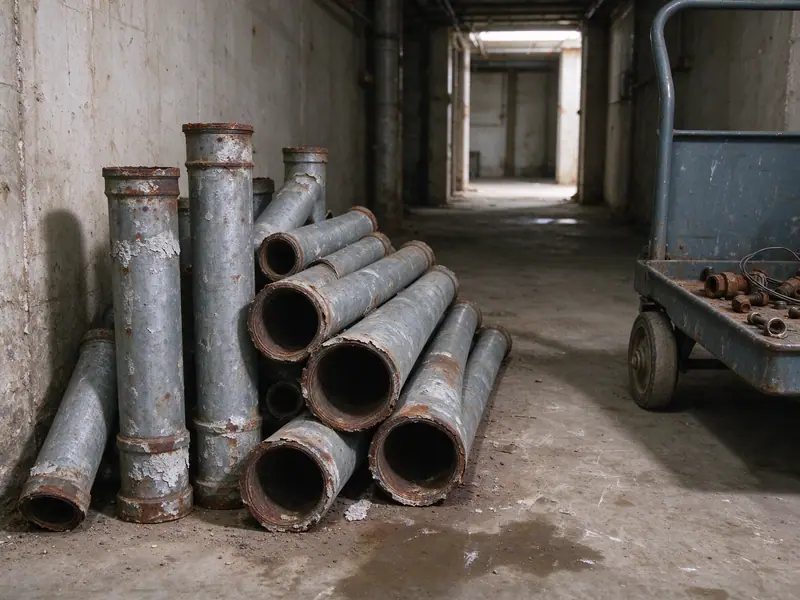
A water riser is the vertical pipe that carries hot or cold water from the basement main, or down from the roof tank, past every apartment on a line. In prewar buildings those risers are often original galvanized steel. City property records (MapPLUTO) show 70% of Manhattan’s elevator co-ops and 72% of the Bronx’s five-plus-unit buildings were built before 1940, so the riser problem is citywide. It is also active: DOB NOW shows 964 riser filings in Manhattan since January 2023, plus 208 in Brooklyn, 173 in Queens and 130 in the Bronx.
Habitat’s account of a 15-story prewar co-op lists brown water, low pressure, scalding showers and leaks in the basement mains, the classic pattern of galvanized scaling from the inside. Add repeated leaks into apartments below, shareholders spending on new branch lines only to tie them into rusted risers, and emergency repairs on the same line, and the board is looking at a capital project rather than a repair budget. Pipe lining is not a shortcut: the 2022 NYC Plumbing Code prohibits cured-in-place and epoxy spray lining (PC 701.10). Pipe lining vs repiping explains why.
How a riser project runs in an occupied building
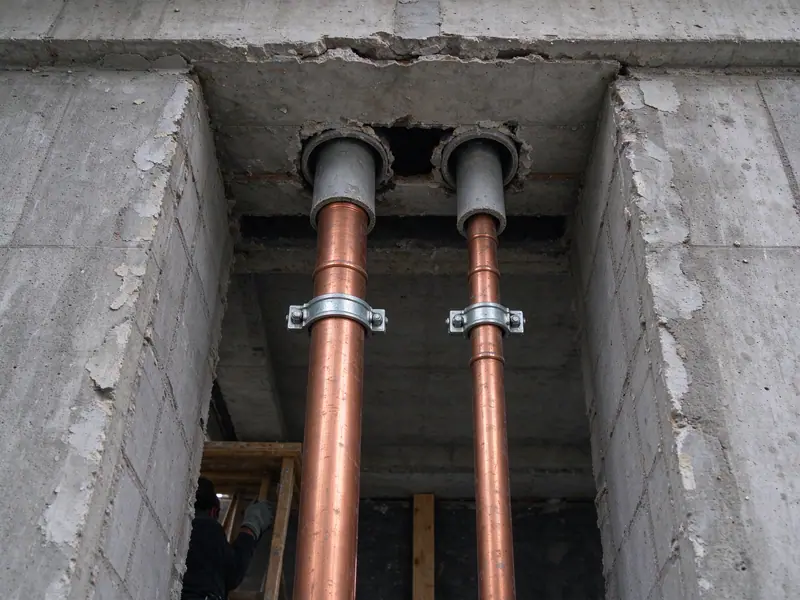
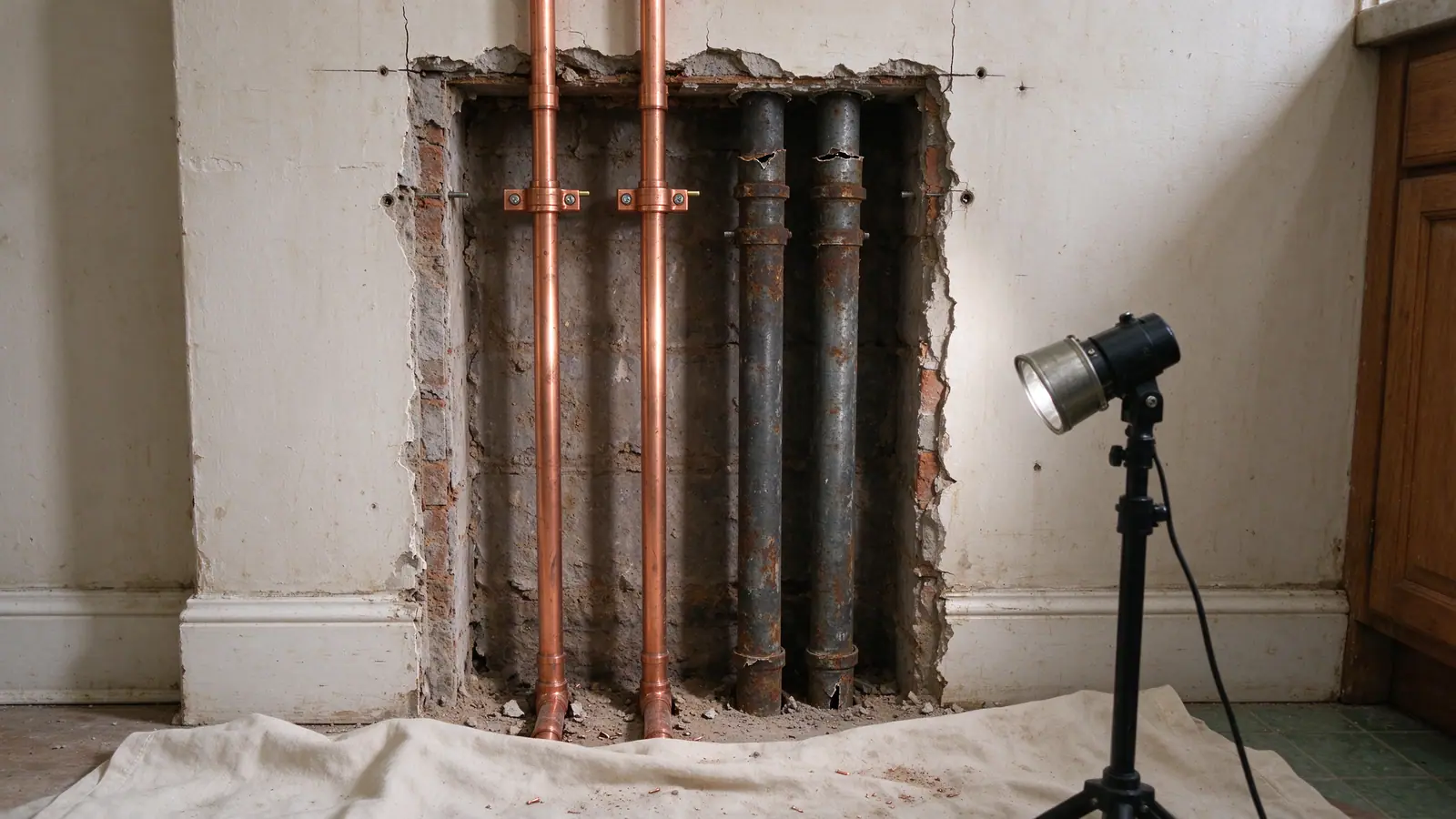
The standard method is a parallel system. New Type L copper risers are installed alongside the old ones, a line at a time and usually from the top down. Old risers stay live until each apartment’s branches are cut over, so shutoffs are short, scheduled and daytime-only. Habitat’s case study describes about three days per apartment for the branch work, and water is normally restored at the end of each working day.
What the board has to manage is access. Each line passes through every apartment stacked on it, usually in kitchens and bathrooms, and the contractor needs those rooms for the length of the line’s work. At The Victoria, a 21-story, 495-unit co-op on East 14th Street, each line required apartment access for up to ten weeks. The proposal gives the managing agent a line-by-line schedule with access windows, shutoff notices and restoration responsibilities before any wall opens.
The design has to account for the building’s pressure. Street pressure lifts water about five to six stories, so taller buildings run on pumps and roof tanks. The code caps static pressure at 85 psi (PC 604.8) and requires at least 20 psi flowing at balanced-pressure and thermostatic shower valves (Table 604.3), which is why top-floor complaints often follow riser work that wasn’t sized for them. If the new risers change pipe sizes or layout, the filing moves from a Limited Alteration Application to engineer-stamped drawings, so bring the building’s engineer in early. Type L vs Type K copper covers the material choice.
Two Manhattan projects, by the numbers
Two published co-op projects show the scale:
- The Victoria replaced risers building-wide for about $10 million, inside a $15 million capital plan that also removed steam heat. The co-op funded the work through an interest-only mortgage.
- A West End Avenue co-op with 45 units replaced its domestic hot water risers for $2.3 million in total, more than $1.5 million of it plumbing, over about nine months. Habitat reports the contractor offered an interest-free payment plan.
Per line, the only published NYC figure is $5,000 to $12,000 per floor per line (handyman-new-york-city.com). Wall and tile restoration inside apartments is usually priced separately. Water riser replacement cost works through budgets by building size.
Budgeting, assessments and who pays
The usual split is that the corporation pays for mains and risers and shareholders pay for branch lines inside their apartments. Alteration agreements can shift that: some co-ops now require a renovating shareholder to replace the riser sections in their unit (Habitat). Boards typically fund a full project through reserves, an assessment, refinancing or a contractor payment plan, and the project can give shareholders the option of having their branch lines replaced at the same time, under the same shutoff. Who pays for riser replacement in a co-op covers the lease language, and co-op alteration agreement plumbing requirements covers the shareholder side.
A written, itemized proposal should separate risers, branch tie-ins, restoration and filing fees so the board can present each one to shareholders. For unit-level work, see apartment repiping; for the drain side, cast iron stack replacement; for top-floor complaints, low water pressure. Local building stock is on the Manhattan and Bronx pages.
What's included
- Type L copper hot and cold risers (ASTM B88), installed as a parallel system
- Branch tie-ins and new valves at each apartment
- Lead-free valves and fittings certified to NSF 372
- Riser supports, expansion allowances and insulation as the code requires
- DOB filing by a NYC Licensed Master Plumber, coordinated with the building engineer
- Line-by-line schedule and shutoff notices for the managing agent
- Pressure test of each line before walls close
- Water normally restored at the end of each working day
Leaks into the apartment below, brown water on one line? A riser survey shows whether it's one line or the whole building. (929) 659-6658