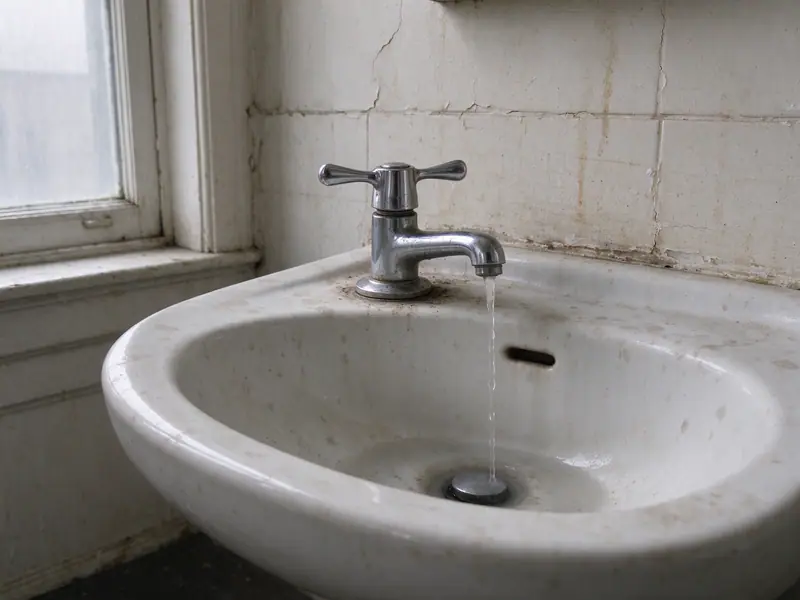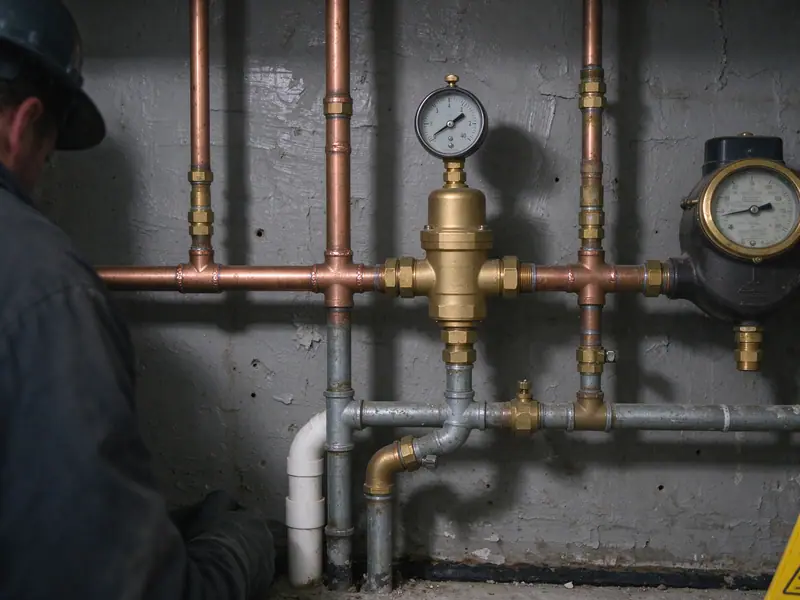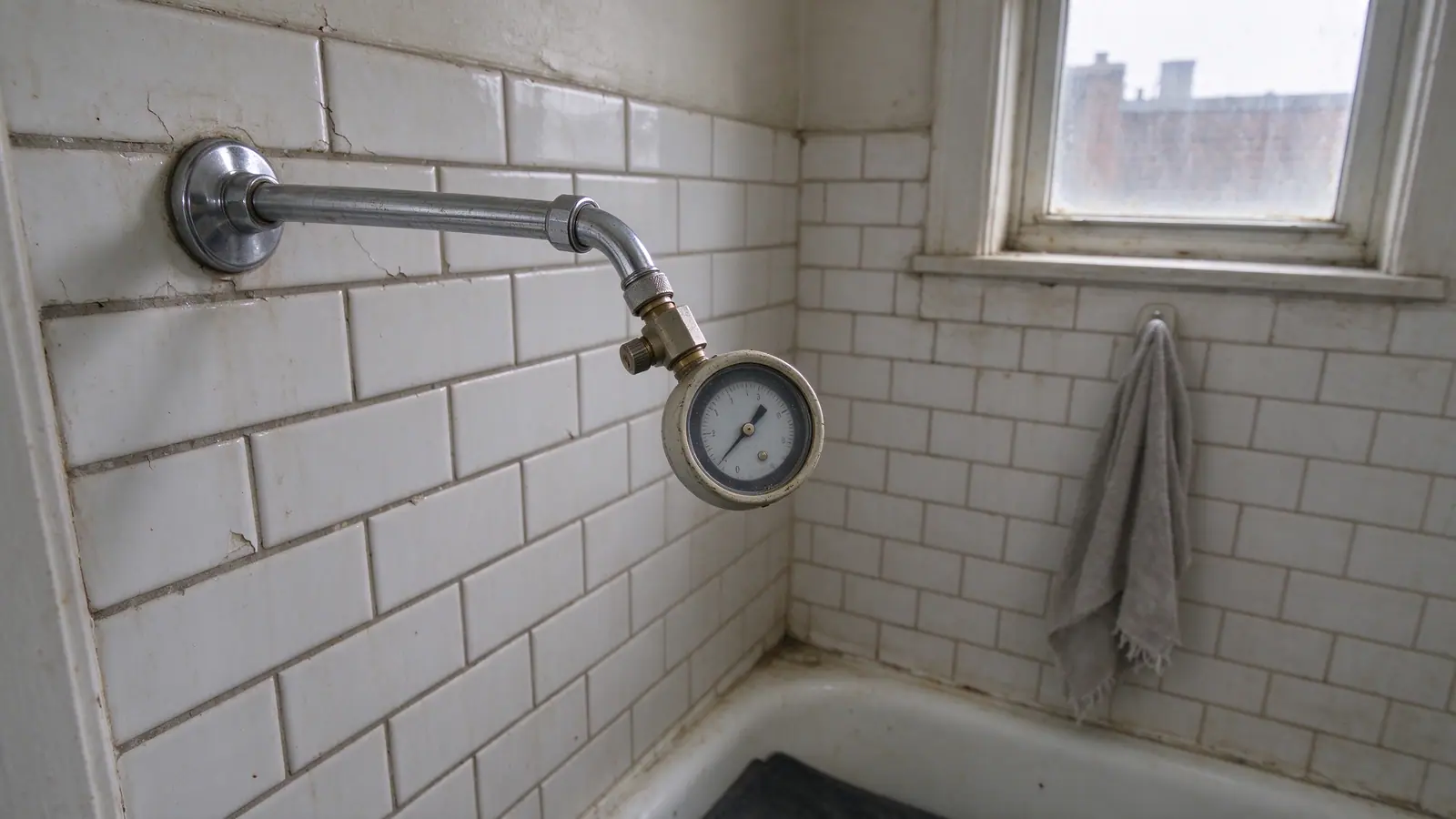
NYC Repipe & Repair diagnoses and fixes low water pressure in New York City houses and small buildings: a top-floor shower that drops to a dribble, a kitchen tap that trickles, a pressure-balance valve that won't hold temperature. Low water pressure in a house usually comes from one of three places: the service line from the street, the house piping, or the height the water has to climb. Readings at the meter, the lowest fixture and the highest one show which it is before money is spent on a fix.
What happens on the first visit
- Static and flow pressure read at the meter, at the lowest fixture and at the top-floor shower.
- The service line material and size checked where it enters the cellar, up to the meter.
- House pipe material identified at three or more points, looking for galvanized steel narrowed by rust.
- A written diagnosis with the readings and a price for the fix, whether that's a pipe run, the service line or a booster pump.
Where NYC water pressure goes
Low water pressure in a house almost always comes down to three things: height, pipe and the service line.
- Height. Water loses about 1 psi for every 2.31 feet it climbs. A top-floor shower 40 feet above the meter starts about 17 psi behind the cellar. City street pressure generally lifts water only about five to six stories, which is why taller NYC buildings rely on pumps and roof tanks (Habitat on water tanks).
- Galvanized pipe. Galvanized steel rusts from the inside, and over decades the scale narrows the bore until a 3/4-inch line carries a fraction of its flow. MapPLUTO shows Queens one- to four-family houses have a median build year of 1935 and Brooklyn’s 1925, so much of that stock is still on its original steel.
- The service line. An old lead or galvanized line from the street, or one too narrow for the house, limits every fixture at once. DEP is clear that the owner owns that line.
Code adds a fourth factor. Table 604.3 of the 2022 NYC Plumbing Code sets a minimum flow pressure of 8 psi at most fixtures but 20 psi at balanced-pressure and thermostatic shower valves. A new pressure-balance shower on an upper floor can run weak while the sink beside it seems fine. Cooperator reported a 25-story co-op whose top floor measured 14–16 psi, below that shower-valve minimum.
How the problem is found
Readings come before any fix. Static and flow pressure are measured at the meter, at the lowest fixture and at the highest one:
- Low at the meter points to the service line or the street side.
- Good at the meter, poor upstairs points to the house piping or to height.
- One fixture only points to that fixture’s aerator, cartridge or shutoff valve.
- Hot side only points to the water heater, its valves or the hot-water piping.
Pipe material is checked at several points along the route, and the service line is identified where it enters the cellar. If you rent or own a co-op unit, the building’s risers, pumps and roof tank are usually not yours to fix. Low water pressure in an NYC apartment covers what renters and shareholders can check.
Fixes and what drives the cost
The fix follows the reading:
- Clogged fixture parts are cleaned or replaced on the spot.
- A failed or mis-set pressure-reducing valve is replaced. The code requires one where static pressure exceeds 85 psi (PC 604.8).
- Rust-narrowed galvanized is replaced in Type L copper, the run that’s choking the flow first. That’s galvanized pipe replacement.
- An undersized or lead service line is replaced from the street. One NYC guide puts that at $8,000–$25,000 (Handyman NYC price guide). See water line replacement.
- Not enough street pressure for the height. The code requires a booster pump, hydropneumatic system or gravity house tank where street pressure can’t meet the minimums (PC 604.7, 606.5).
Cost depends on which of these it is, how many floors the new pipe climbs, and how much wall has to open. Piping work beyond ordinary repairs is filed in DOB NOW: Build, with a fee starting at $130 for a one- to three-family house. You get a written price with the readings attached before work is booked.
When low pressure means a repipe
Low pressure caused by galvanized pipe doesn’t get better with time. If you see weak upper-floor pressure together with brown tap water after the taps sit, or leaks at threaded joints, the steel is failing throughout, not just in one run. Replacing one section only moves the bottleneck to the next.
At that point the real fix is copper end to end. Should I replace galvanized pipes? walks through the decision. Whole house repiping replaces every supply line from the meter to the fixtures, and it’s often paired with a new service line so the house gets full flow from the street up. If the service line may be lead, how to tell if you have lead pipes is the place to start.
What's included
- Pressure readings at meter, low and high fixtures
- Flow test at the worst fixture
- Service line material and size check
- Main valve and pressure-reducing valve check
- Fixture aerator and cartridge check
- Galvanized and lead pipe identified on the route
- Booster pump or house-tank sizing where needed
- Written diagnosis with the readings recorded
Strong in the cellar, weak upstairs? Three pressure readings tell you whether it's the pipe, the service line or the height. (929) 659-6658