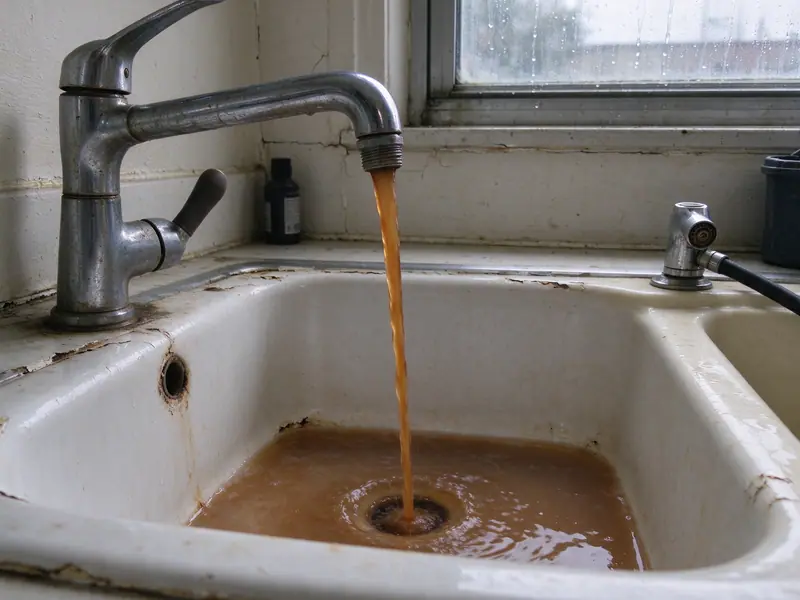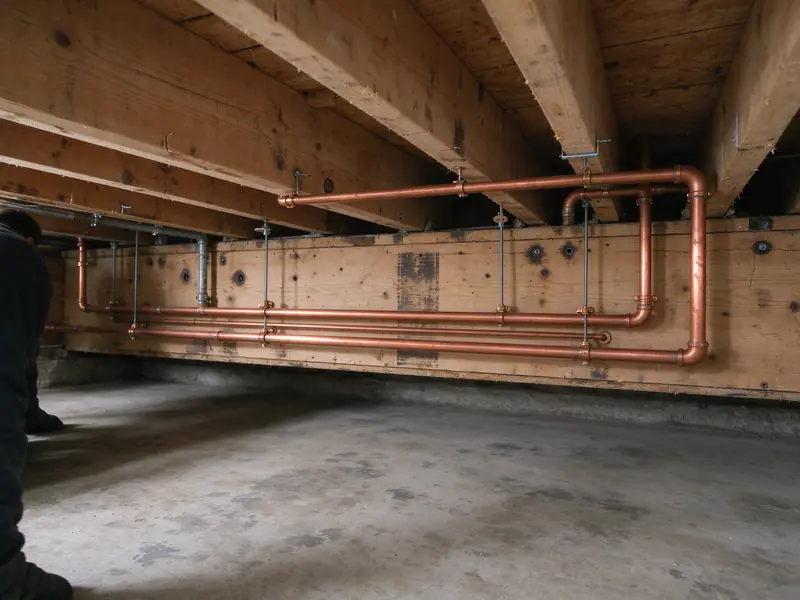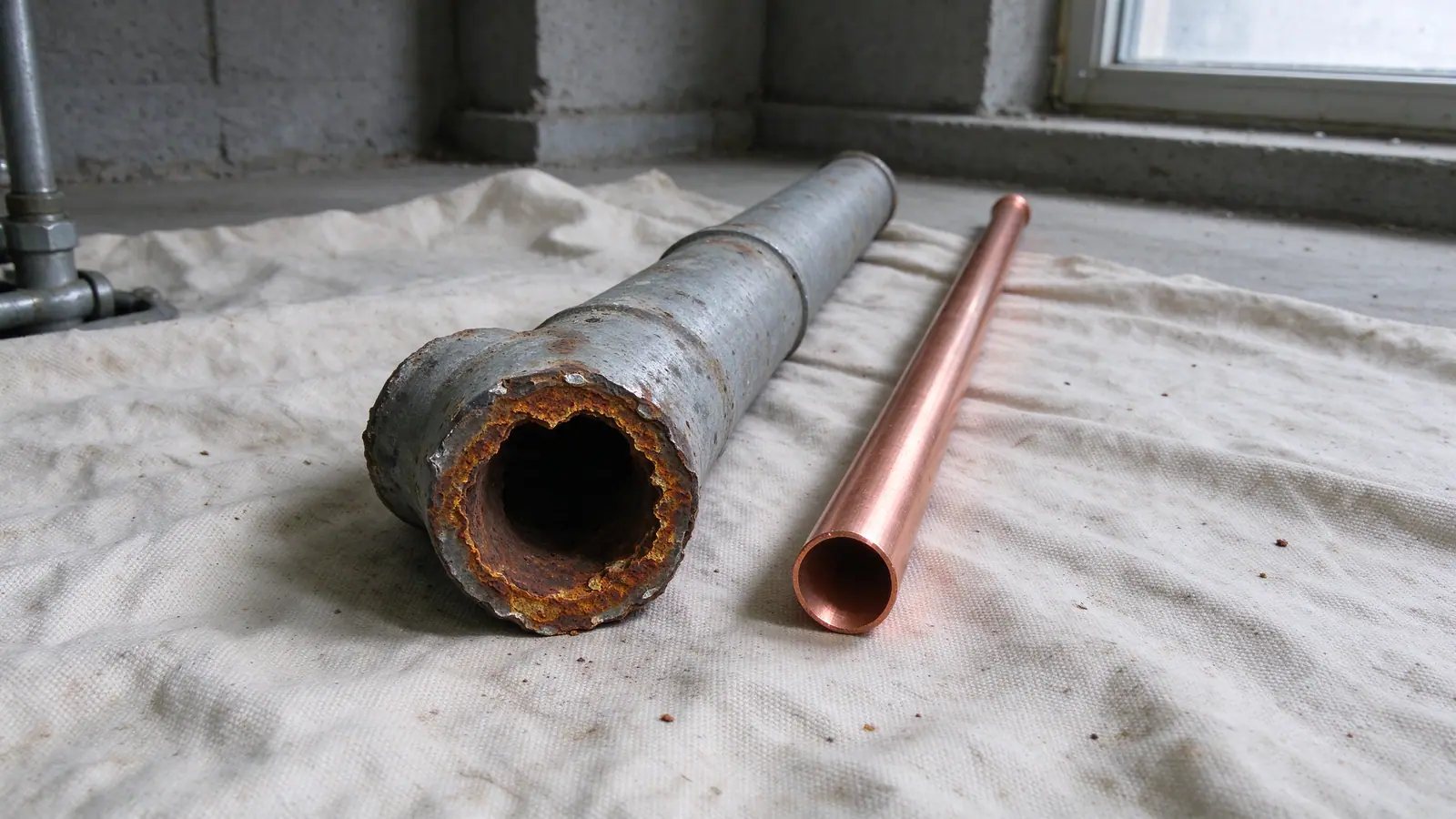
NYC Repipe & Repair replaces galvanized steel water pipe with Type L copper in New York City houses and apartments. Galvanized pipe replacement is the fix for the two problems galvanized causes as it ages: brown or orange water, and pressure that drops floor by floor as rust closes the bore. Published lifespans for galvanized run about 40 to 60 years, and it was the standard supply pipe until roughly the 1950s and 1960s. The new pipe is copper because the 2022 NYC Plumbing Code no longer lists galvanized steel for water distribution.
What happens on the first visit
- Pressure and flow readings at the meter, the lowest fixture and the top-floor shower, to measure how far scale has closed the pipe.
- Galvanized located at three or more points, plus any copper from earlier repairs.
- The service line checked from the curb valve to the meter for galvanized or lead, and the electrical ground noted if it uses the water pipe.
- A written, itemized price covering the copper, transitions, DOB filing and wall openings, before anything is booked.
How galvanized pipe fails in NYC water
Galvanized pipe is steel with a thin zinc coating. Once the zinc is gone, the steel rusts from the inside, and the rust builds up as scale that narrows the bore. Galvanized was the standard supply pipe in New York City until roughly the 1950s and 1960s, and city property records (MapPLUTO) show 74% of Brooklyn’s one- to four-family houses were built before 1940, with a Queens median of 1935. Against a typical working life of 40 to 60 years, most of that pipe is decades past due.
NYC water speeds the process. It is soft, averaging about 25 mg/L hardness, and DEP’s annual water quality report puts the average Langelier saturation index at −2.21, which means the water dissolves metal instead of coating it. DEP’s orthophosphate dosing slows corrosion but can’t remove rust already in the pipe. The symptoms are predictable:
- Brown or orange water after the tap sits overnight, often worst on the hot side. Brown tap water explains how to tell pipe rust from a water heater or a street main.
- Pressure that falls floor by floor, because scale chokes a 3/4-inch line. Low water pressure covers the other causes to rule out.
- Leaks at threaded joints, where the threads cut the wall of the pipe to its thinnest point.
Copper only, and how the transition is made
Galvanized steel is not on Table 605.4 of the 2022 NYC Plumbing Code, the list of materials allowed for water distribution. Neither are PEX, CPVC or thin-wall Type M copper. Replacement work is done in Type L copper (ASTM B88), soldered or joined with permanent press fittings. Removable push-fit fittings are prohibited (PC 605.9).
Where new copper has to connect to galvanized that stays in service, the joint is the weak point. Copper and steel touching in water set up galvanic corrosion, which eats the steel side. PC 605.24.1 requires a brass fitting, a dielectric fitting or an ASSE 1079 dielectric union at every such transition. A plain steel union is not enough.
In older houses the metal water pipe sometimes serves as the electrical ground, so when galvanized at the service comes out, an electrician checks the grounding path.
Section by section, or the whole house
A burst galvanized section can be cut out and replaced in copper, the right move in an emergency. The rest of the galvanized is the same age, though, and the next weak joint is often a few feet away.
Partial pipe replacement still makes sense when the galvanized is limited to one area, for example a single bathroom branch left over from an earlier conversion. When galvanized shows up at three or more points, or the house has both brown water and weak upper-floor pressure, the economical answer is usually a whole house repiping. The decision guide should I replace galvanized pipes? walks through the trade-off. If you’re buying, read buying a house with galvanized pipes before the inspection contingency runs out.
Cost, permits and the service line
Published NYC ranges for a full copper repipe run $12,000 to $30,000+ for a 2–3 story house (A Good Plumber) and $15,000 to $35,000 for a brownstone (The Plumber NYC). Floors, bathrooms, plaster versus drywall and how much galvanized remains drive the number. Galvanized pipe replacement cost breaks the numbers down, and the repipe cost estimator runs your own house.
The work is filed in DOB NOW: Build as a Limited Alteration Application by a NYC Licensed Master Plumber. For a one- to three-family house the fee starts at $130 for work up to $5,000, plus $2.60 per additional $1,000, so a $30,000 job carries a $195 fee. The permit guide has the full chart.
Check the line from the street, too. DEP counts about 121,000 service lines in the city that are lead or galvanized requiring replacement, and the owner owns the whole line. A galvanized service feeding new interior copper limits the gain. See lead service line replacement for how DEP’s free program and private replacement work, and the Queens and Brooklyn pages for local housing stock.
What's included
- Type L copper for all replaced hot and cold supply (ASTM B88)
- ASSE 1079 dielectric unions or brass fittings at every steel transition
- Lead-free valves and fittings certified to NSF 372
- New shutoff valves at each fixture served
- DOB NOW filing by a NYC Licensed Master Plumber
- Pressure test before walls are closed
- Removal of abandoned galvanized that can be safely reached
- A grounding check flagged for the electrician where the old pipe was the ground
Brown water in the morning and weak pressure upstairs? A pressure test on three floors shows how much galvanized is left. (929) 659-6658