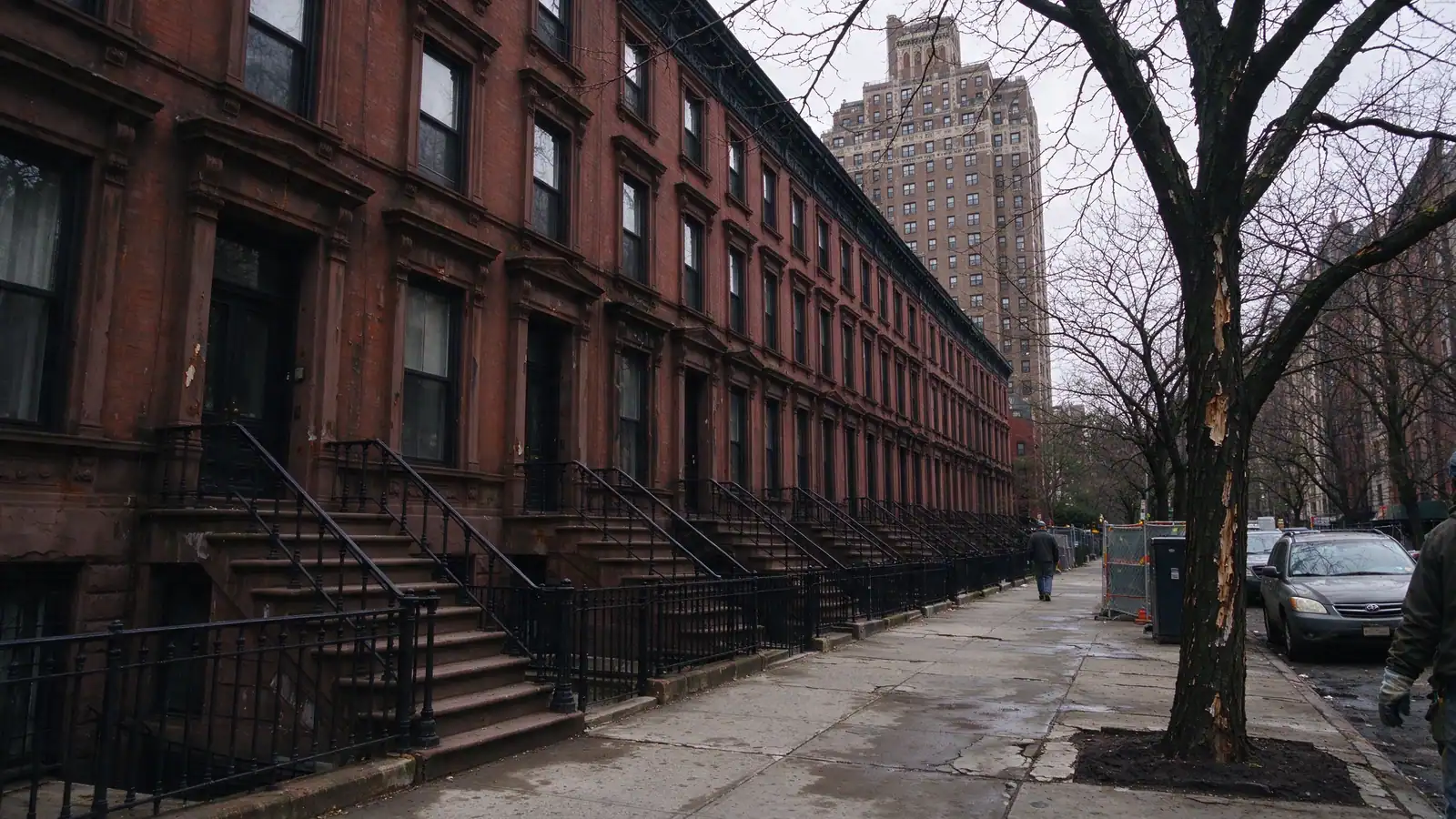
NYC Repipe & Repair handles repiping Upper West Side owners need in two very different buildings. On Central Park West, West End Avenue, Riverside Drive and Broadway it's apartment branch lines and co-op risers. On the brownstone side streets of the West 70s and 80s it's a four- or five-story house moved off galvanized and lead to Type L copper. Every job is filed in DOB NOW, cleared with the board or LPC where needed, and priced in writing first.
What repiping in Upper West Side actually involves
Most of the Upper West Side went up between 1885 and 1910, and the 1904 subway under Broadway set off the apartment boom. The Ansonia (1902), the Dorilton (1902), the Apthorp (1908) and the Belnord (1908) are on Broadway; the Dakota (1884) and the San Remo are on Central Park West; and West End Avenue and Riverside Drive filled with tall prewar apartment blocks, now largely inside the Riverside–West End Historic District (1989, extended 2012 and 2015). A century on, the risers are the problem. One 45-unit West End Avenue co-op is replacing its leaking domestic hot-water risers two at a time over nine months, for about $2.3 million in all with more than $1.5 million of plumbing, and replacing the gravity tank with variable-speed booster pumps (Habitat). For shareholders, the job is the branch lines between that riser and the fixtures: an apartment repipe timed to the building's shutdown schedule.
Between the avenues, the side streets of the West 70s and 80s are brownstone rows from the same boom, many of them in the Upper West Side–Central Park West Historic District (1990), which runs from West 62nd to 96th Street out to Amsterdam Avenue, plus the smaller West 73rd–74th Street and West 76th Street districts. These are house jobs, the same as in Brooklyn. The service enters the cellar under the stoop, often still in lead, which was legal in NYC until 1961. Galvanized supply climbs four or five stories, and the top floor sits 40 to 50 feet above the meter. At 1 psi lost per 2.31 feet of rise, that floor starts about 17 to 22 psi down, so the top-floor shower fails first. A brownstone repipe here also needs an LPC Certificate of No Effect for the DOB-permitted interior work.