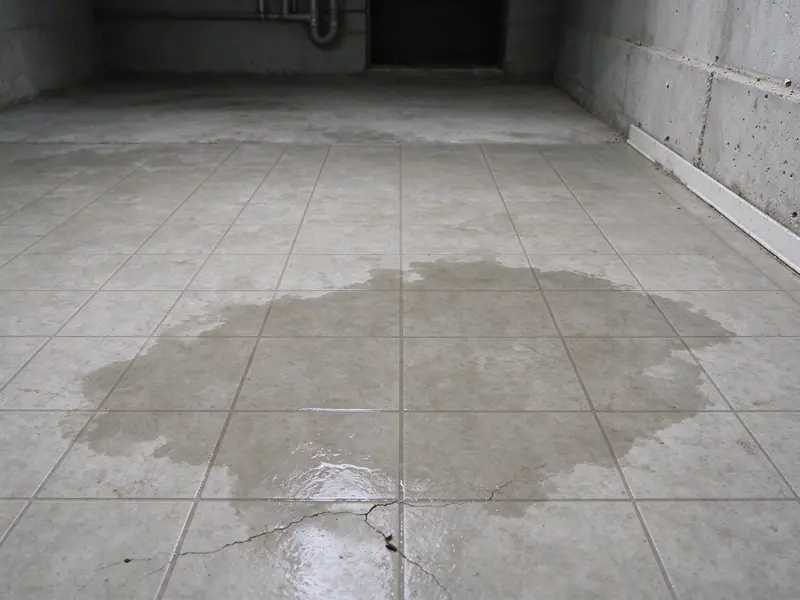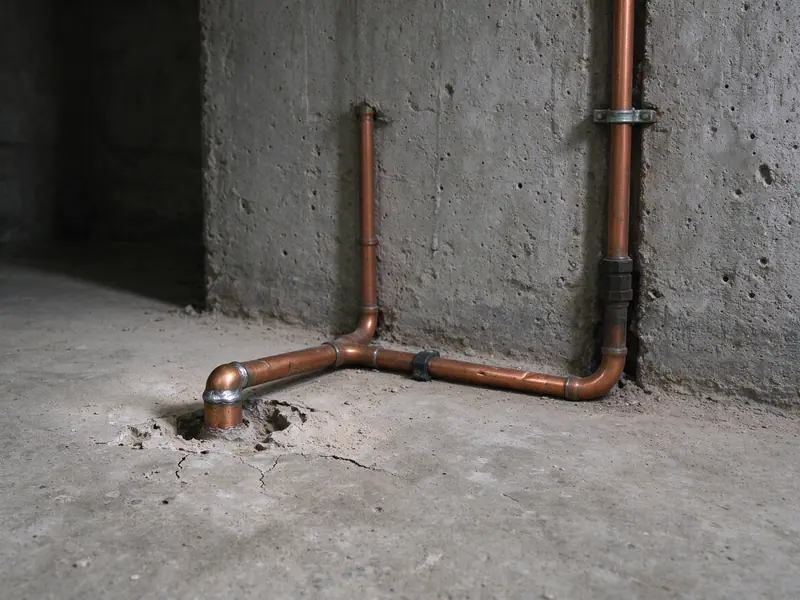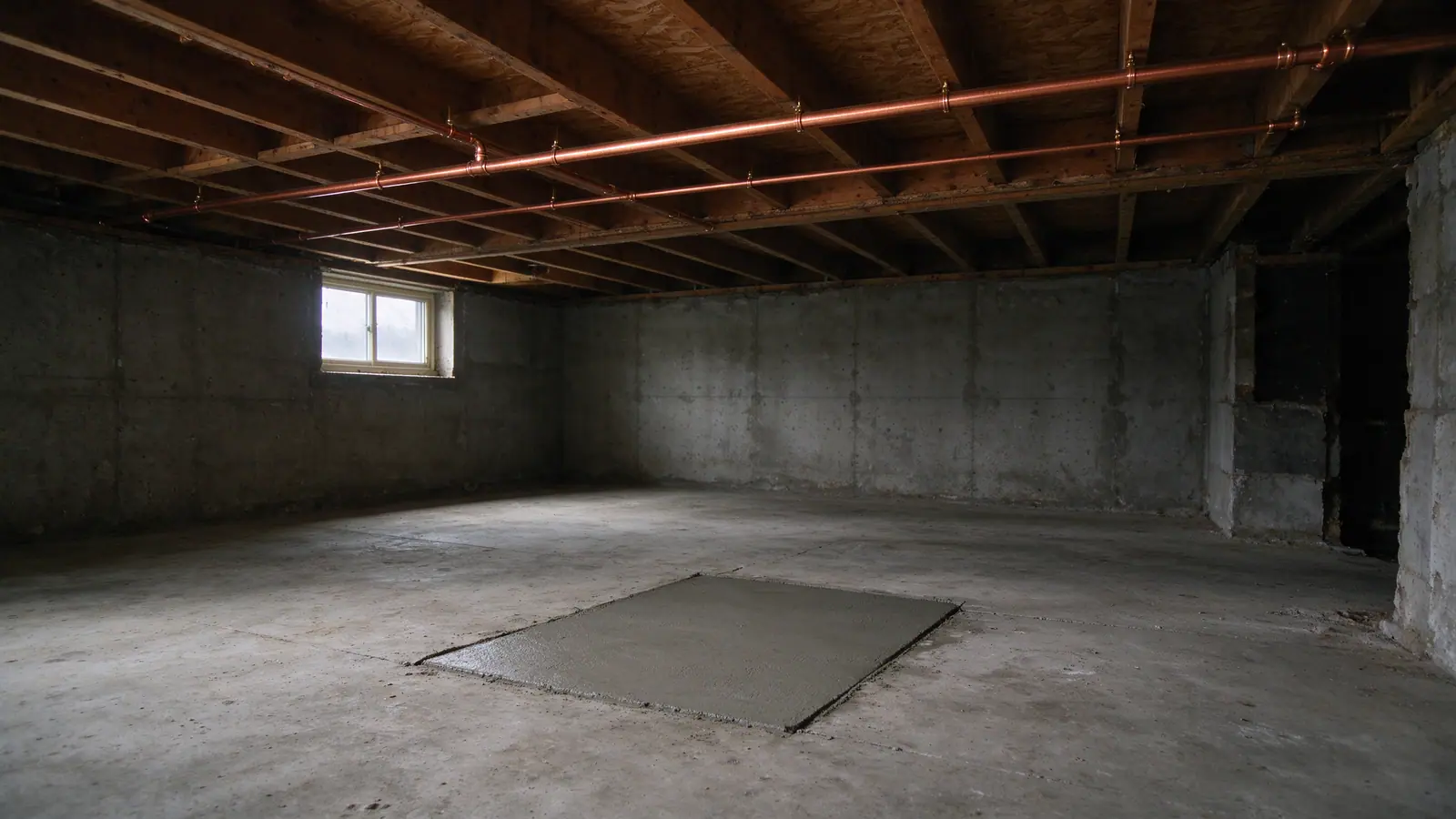
NYC Repipe & Repair handles slab leak repair for New York City houses where a supply or drain line runs under concrete: a rowhouse's cellar or basement slab, or the floor of a slab-on-grade house in Queens or Staten Island. The leak is located before any concrete is cut. Then the line is either abandoned and rerouted overhead in Type L copper, or exposed through one planned opening and repaired. Typical signs are a jump in the water bill or a damp patch of floor.
What happens on the first visit
- A meter check with every fixture off, to confirm water is leaving.
- Hot and cold lines isolated and pressure-tested separately, so the leaking run is known.
- The buried route traced and the cellar ceiling checked for a reroute path.
- A written price for both options, reroute or open the slab, before work is booked.
What a slab leak means in an NYC house
Few NYC houses sit on a slab like a Sun Belt ranch. The buried pipe is usually in the cellar: a supply line or water service running under the cellar or basement floor, or a cast iron drain on its way to the sewer. Or it’s a slab-on-grade house in Queens or Staten Island.
Buried pipe fails like pipe in a wall, only unseen. NYC water is soft and corrosive: DEP’s annual water quality report puts the average Langelier index at −2.21, which eats older copper from the inside, so buried lines show the same pinhole pattern. Galvanized rusts through, and old drains crack, which is a cast iron stack question.
Locate first, then reroute or open the slab
Every fixture is shut and the meter read; then hot and cold lines are isolated and pressure-tested separately, the same discipline as any water leak detection job. The equipment-trade guide Pipelineon puts slab leak detection at $600–$900 in high-cost metros.
Then there are two fixes:
- Reroute overhead. The buried line is capped, and new Type L copper runs along the cellar ceiling. No concrete is broken.
- Open the slab. Where the line must stay below the floor, as a water service usually does, one planned opening is cut and patched. Underground water pipe is limited by Table 605.4.1 of the NYC Plumbing Code to Type K copper, brass, ductile iron or stainless steel.
Epoxy lining is not an option: PC 701.10 prohibits it (pipe lining vs repiping). A leak on the service line itself becomes water line replacement.
Permits, insurance and when it becomes a repipe
Repairing 10 feet of pipe or less is ordinary plumbing work with no permit. A longer reroute is filed in DOB NOW as a Limited Alteration Application, and an active leak can be fixed first under an Emergency Work Notification (permit tiers). Insurance usually pays for sudden water damage, not the worn-out pipe (what adjusters look for).
A second leak in the same buried system, or galvanized still running overhead, means the slab leak is a symptom. At that point whole house repiping costs less than chasing the next one.
What's included
- Leak isolation and pressure testing by line
- Reroutes in Type L copper (ASTM B88)
- Type K copper for pipe that stays underground
- Concrete cut and patch for slab openings
- Lead-free fittings and valves to NSF 372
- Dielectric or brass transitions to old steel
- Permit filed by a NYC Licensed Master Plumber where required
- Final pressure test before closing up
Water bill jumped and nothing is dripping? A meter test with every tap closed shows whether something under the floor is leaking. (929) 659-6658