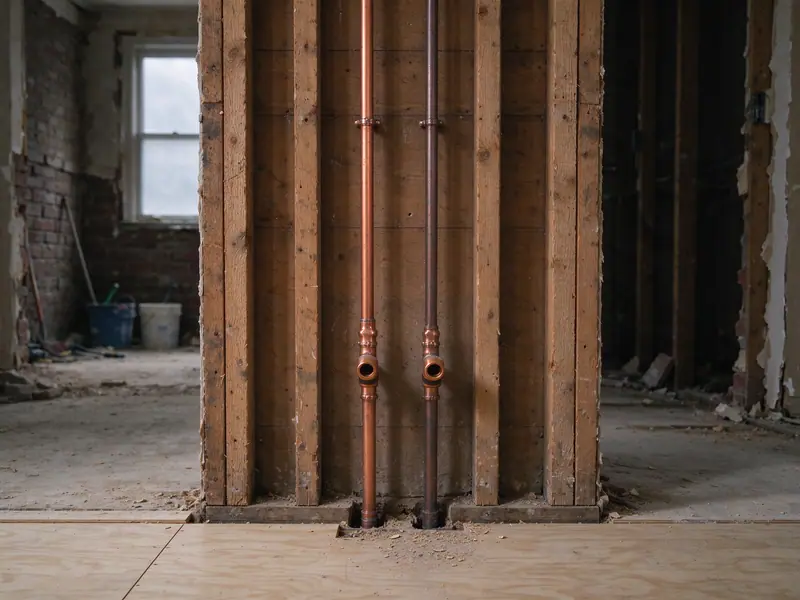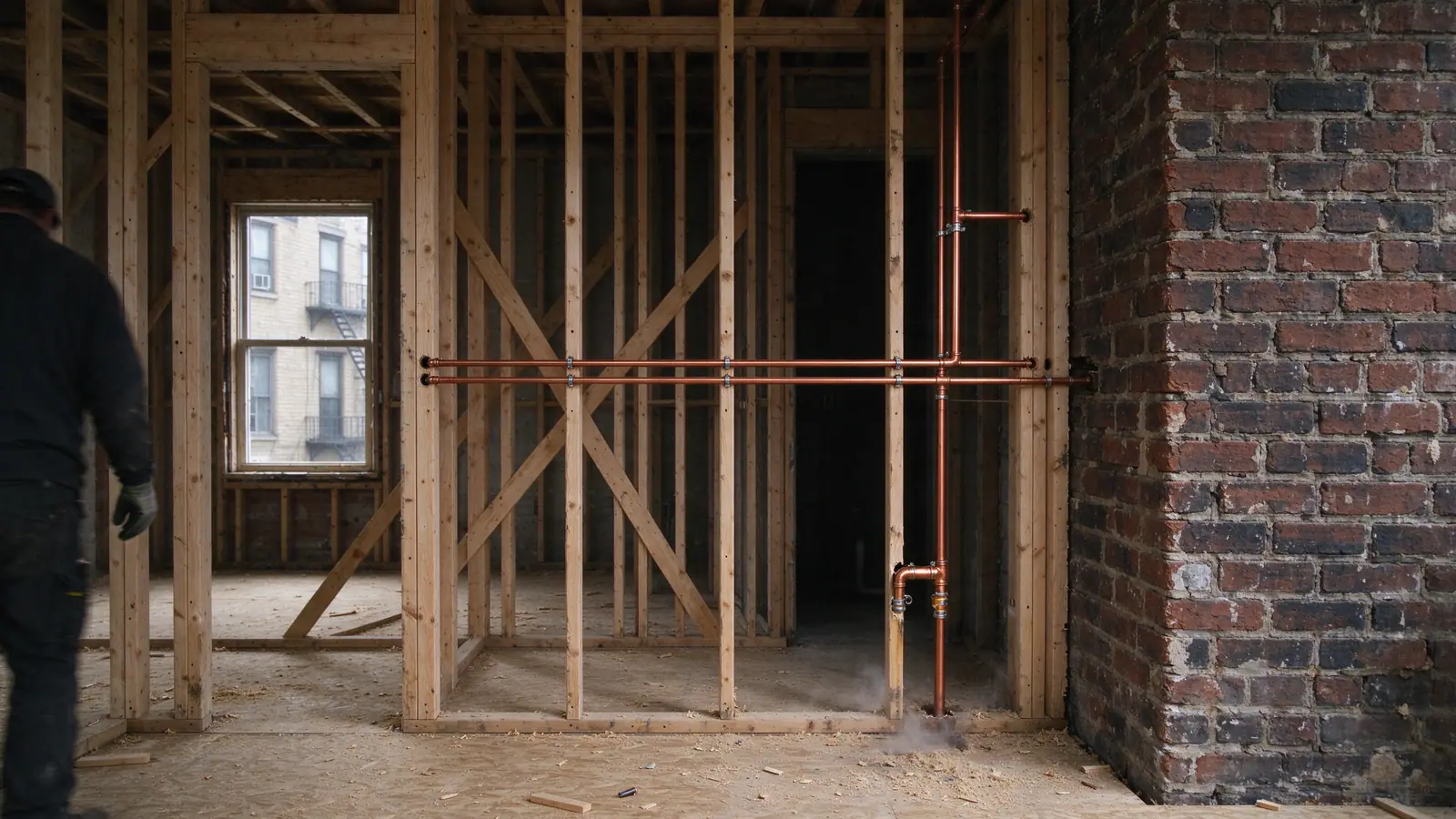
NYC Repipe & Repair handles repiping during renovation for New York City houses and apartments, running new Type L copper while the walls, floors and ceilings are already open. That is the cheapest moment to replace old supply pipe: no access cutting, no separate restoration, and the new lines go where the new layout needs them. The plumbing scope is coordinated with your general contractor and architect, and filed the way the work requires, as a Limited Alteration Application or on PE/RA plans.
What happens on the first visit
- A walk-through with the plans, marking existing risers, branches and the main.
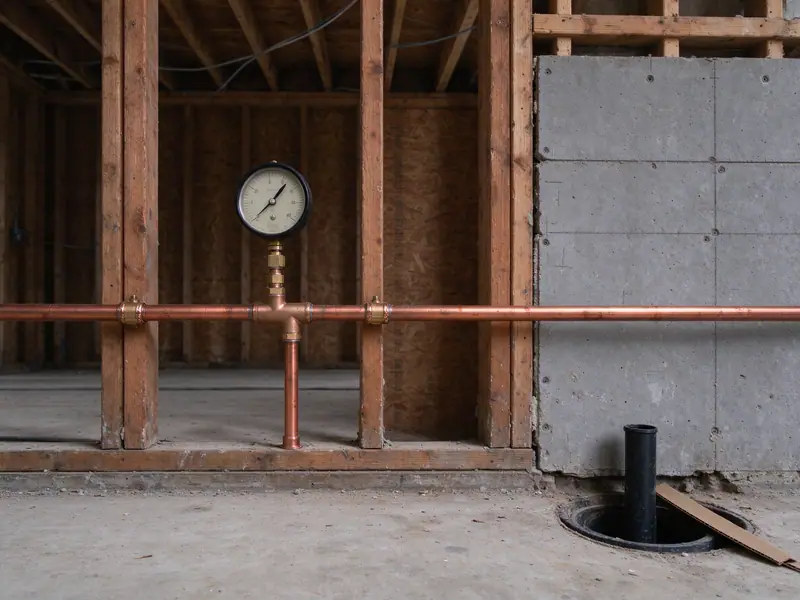
- Pipe material identified and pressure measured before demolition starts.
- Rough-in and inspection dates agreed with your general contractor.
- A written plumbing price and filing path, LAA or PE/RA, before work is booked.
Why open walls change the math
On a stand-alone repipe, much of the cost is reaching the pipe and closing up after it. Labor is roughly 70% of a repipe (HomeAdvisor), and drywall repair runs about $50–$75 per square foot (Bob Vila). In a gut or kitchen-and-bath renovation, the walls are already open and finishes are already budgeted, so most of that disappears.
The expensive mistake is new tile over 80-year-old galvanized: when it leaks, the finish comes out. Galvanized pipe replacement belongs in the scope, and the cast iron stack is worth pricing too. Plastic drain pipe is allowed only in residential buildings of five stories or fewer (PC 701.9).
Coordinating with the GC and architect
Plumbing goes in after demolition and framing, before insulation and board. The new Type L copper is pressure-tested and inspected while visible; then your general contractor closes up. Rough-in dates, inspections and who restores what are agreed in writing. The free pre-hire checklist lists what to ask for, from the plumber’s licence number to the DOB NOW job number. Skipping the permit is costly: penalties start at $520 for a one- or two-family house and $6,000 for other buildings.
The filing depends on what changes. DOB says a Limited Alteration Application covers repair or replacement of existing piping that doesn’t require a Professional Engineer or Registered Architect. Replace pipe in place, and the Licensed Master Plumber files an LAA. Move the kitchen, add a bathroom or change the layout, and the work generally goes on PE/RA drawings (permit tiers). In a landmark district, an LPC Certificate of No Effect can apply too.
Expect someone to suggest PEX to save money. Inside NYC it isn’t code work for drinking water (copper vs PEX).
Co-op and condo apartments
In a co-op, the alteration agreement sets the rules. Usually the building owns the risers and the shareholder owns the branch lines, though some agreements shift riser cost to the renovating shareholder (Habitat). Boards may require an engineer’s review, a certificate of insurance, set hours and per-shutoff fees. See alteration agreement requirements, who pays for risers and apartment repiping. For a house, the method is whole house repiping with fewer openings.
What's included
- Type L copper supply for the renovated area or whole house
- New shutoffs at every new fixture location
- Lead-free valves and fittings to NSF 372
- Coordination with your GC and architect
- DOB NOW filing by a NYC Licensed Master Plumber
- Pressure test and inspection before close-up
- Drain and vent work priced alongside when needed
- Co-op or condo board paperwork support
Walls coming down soon? A pre-demolition walk-through prices the repipe while it's still the cheapest it will ever be. (929) 659-6658